What disgusts you and I will tell you who you are
The Character of RainThe expression linking disgust with personal identity turns the childhood narrator’s revulsion at feeding carp into a theory of individuality. What first appears to be an unusually intense response to the fish becomes a way to distinguish one person from another: ordinary inclinations may be shared, but what provokes disgust exposes something more particular. The maxim grows from a grotesque encounter with eating, while the narrative also uses that encounter to unsettle the boundary between the observer and the bodies being observed.
Formation in the Feeding Scene
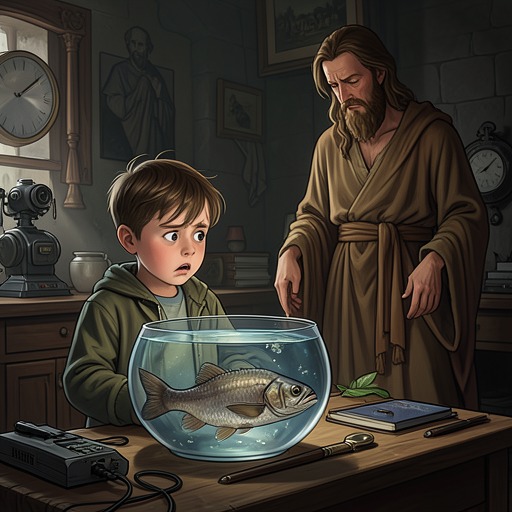
The narrator’s response is striking because it differs from earlier encounters with unpleasant or disturbing things. The three-year-old had examined squashed frogs in the street, shaped pottery from excrement, inspected the contents of a sister’s handkerchief during a cold, and poked a finger into raw veal. Those acts sprang from scientific curiosity and had caused no revulsion. The carp’s mouths, by contrast, made the narrator break out in a cold sweat. That contrast gives the maxim its basis: disgust is not simply a measure of how objectively repellent an object might be, but a response that marks the observer.
At the pool, the fish crowd around food with mouths wide open. Their lips open and close with a sucking, smacking motion, and the narrator sees down toward their stomachs as they swallow. The feeding spectacle is disturbing not only because it is greedy, but because it exposes the route from mouth to interior. The narrator tries to feed the fish with eyes closed, relying on the sucking and gurgling sounds to know they have arrived. Looking away cannot make the encounter impersonal; it intensifies the sense that the mouths have become the defining feature of the scene.
Disgust and Individuality
The expression takes shape as a claim about what reveals a person. The narrator considers personality and inclination insufficient distinctions because they are often ordinary and shared. Disgust, instead, seems to disclose an individual more directly. The idea does not classify the carp as disgusting for everyone; it makes the narrator’s own reaction significant. The question is not merely what the fish look like, but why these mouths provoke such a singular physical response when other unpleasant sights did not.
The scene complicates any easy separation between the narrator and the fish. During a later feeding, the carp lunge for rice cake and open their jaws so widely that their stomachs are visible. Their exposed digestive tracts violate a bodily boundary that people ordinarily keep concealed. The narrator’s attention shifts from judging the fish to wondering what it would mean if people displayed their own insides. The thought turns revulsion into recognition: the visible bodies of the carp make the narrator confront a shared condition rather than a wholly alien one.
The Tube and the Limits of Difference
This recognition belongs to the book’s recurring image of life as tubular. At an earlier stage, Narrator (God) is described through unconscious ingestion, digestion, and excretion, a living body that takes nourishment in and retains nothing. The Tube is at once full and empty, a hollow substance through which the world passes. The carp’s mouths make that abstract image visible: they swallow, and their open bodies seem to show the passage of food toward the stomach.
The voice that addresses the narrator at the pool presses the analogy further. It insists that the narrator, too, emerged from a tube and cannot claim to be fundamentally different from other eating bodies. The narrator first tries to silence this voice, then considers whether the daily feeding might carry a divine message. The resulting meditation sharpens the expression’s tension: disgust marks a particular self, but the sight that produces disgust also threatens the self’s claim to separateness. The carp are repellent precisely as they become mirrors.
Recurrence and Significance
The pool becomes a recurring point of reference in memory. Years later, when learning Latin, the narrator instinctively turns carpe diem into a phrase about eating carp, and the association returns the narrator to the ordeal beside the water. The conventional instruction to seize the day is therefore colored by an earlier experience: the approach of noon brought dread of feeding, and afterward the memory continued to trouble the afternoon. The wordplay carries the bodily scene forward rather than allowing it to remain an isolated childhood episode.
The maxim’s significance lies in this movement between aversion and self-knowledge. Disgust initially seems to establish distance from the carp, but close attention reveals the shared digestive body beneath that distance. At the same time, the narrator’s particular inability to endure the spectacle becomes evidence of individuality. The expression holds both claims together: the body connects people through the same processes, while the things each person cannot bear disclose a distinctive self.